Short answer: starting January 1, 2026, the 2025 California Green Building Standards Code (CALGreen, Part 11 of Title 24) requires new single-family homes with parking to include at least one EV-ready circuit, a low-power Level 2 receptacle, even if the buyer never mentions an EV charger. New construction and major renovation bids that don’t already account for this are pricing the job wrong.
What the single-family rule actually requires
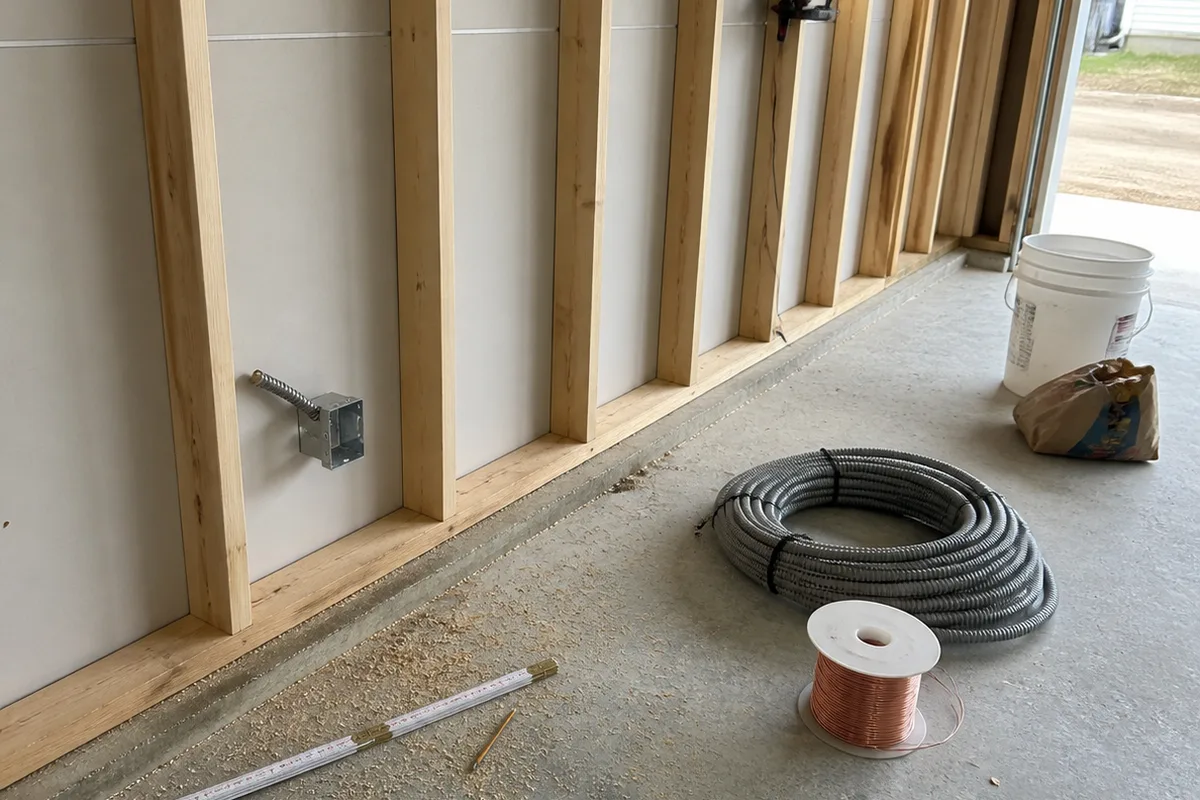
Under CALGreen §4.106.4.1, new one- and two-family dwellings and townhouses with attached private garages must provide at least one EV-ready parking space: a complete circuit, wire and breaker, terminating in a receptacle capable of low-power Level 2 charging (208/240V), typically a NEMA 14-50, 6-30, or 6-50 outlet. The homeowner doesn’t need to install a charger at time of sale, the circuit and receptacle just need to be there and ready.
That’s a meaningfully different ask than “EV capable,” which some earlier code cycles allowed to mean just reserved panel space and a stubbed conduit path. EV-ready means a finished, functional circuit. If your rough-in estimate for new construction still treats EV wiring as an optional add-on or a bare conduit run, it’s now under-scoped for code minimum on most single-family jobs.
It also changes what belongs in a good phone intake for EV work: a homeowner who says they don’t want a charger yet still has a code-required circuit to price in. See what to ask before you book an EV charger install for the questions that still apply once the circuit’s already in place.
Where it gets more complicated: multifamily and commercial
CALGreen distinguishes between three tiers on larger projects: EV Capable (reserved capacity and pathway, no finished circuit), EV Ready (a complete circuit to a receptacle, same as the single-family requirement), and EVSE Installed (an actual working charger). The 2025 code cycle increased minimum requirements across all three tiers for multifamily dwellings, hotels, and nonresidential parking, along with new provisions for automatic load management systems (ALMS) that let a building serve more EV-ready spaces off shared electrical capacity, as long as each space maintains a minimum guaranteed output.
The exact percentage requirements differ by occupancy type and whether spaces are assigned or common, and they’re detailed enough that quoting a specific number from memory is a good way to under-bid or over-promise. Pull the current CALGreen Part 11 text (or your plan checker’s summary of it) for the specific occupancy type before pricing a multifamily or commercial job, don’t assume the numbers from a job a year ago still apply.
The part that catches contractors off guard: local reach codes
Title 24 sets a statewide floor, not a ceiling. Cities and counties can adopt “reach codes” that require more than the state minimum, and many already do, higher EVSE-installed percentages, faster timelines, or broader building types than CALGreen mandates on its own. A bid based only on the state code can come in under what the local jurisdiction actually requires. Checking the local amendment before you bid, not after the plan check comes back, is the difference between an accurate quote and a change order.
Reach codes pushing EV readiness tend to move in step with local solar and battery mandates, worth knowing if you’re already quoting NEM 3.0 and SGIP battery incentives on the same jobs.
What this means for how you bid
- Treat EV-ready as a line item on every new single-family bid with parking, not a maybe. It’s code minimum now, not an upsell.
- Don’t quote multifamily or commercial EV requirements from memory. Pull the current tier requirements for that occupancy type before pricing.
- Check the local reach code before you bid, not just the state CALGreen minimum. The gap between the two is where under-bids happen.
- Know the receptacle types cold: NEMA 14-50, 6-30, and 6-50 covers most low-power Level 2 EV-ready installs, and getting the wrong one on a rough-in means a return trip.
- Flag panel capacity while you’re there. An EV-ready circuit on an older service is often the thing that reveals the panel’s maxed out. See what to ask on a panel upgrade call before you’re standing in front of a full panel mid-job.
The rule already took effect. The bids that account for it correctly, on both new construction and the renovations that trigger it, are the ones that don’t need a change order to fix a code minimum that was knowable before the first shovel.
Source: California Department of General Services, 2025 Title 24 California Code Changes.